Technical Program |
Social Events |
The ACC 2019 mobile app is now available in the Apple Store and Google Play Store!
Technical Program
The ACC technical program will start every day with plenary or semi-plenary lectures, and end with a public lecture on the second day. The program will continue with regular, invited, and tutorial sessions in parallel. Pre-conference workshops, special sessions, and exhibits will complement the paper presentations. The topics will be in all areas of the theory and practice of automatic control.
A preliminary technical program is available here:
https://css.paperplaza.net/conferences/conferences/ACC19/program/
NOTICE TO PRESENTERS: Laptops will NOT be available in the technical session rooms. Please plan to use your own device or make other arrangements.
2019 ACC Plenary, Semi-Plenary, and Public Lectures
The conference technical, plenary/semi-plenary and public lectures, and special sessions will reflect the diversity of theory and applications of control that is one of the hallmarks of an ACC. Our slate of plenary and semi-plenary speakers consists of well-known researchers and leaders from academia, industry, and government research labs.
| Plenary | |
 |
Wednesday morning
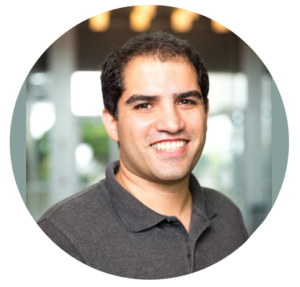
“Stochastic Adventures in Systems and Controls” Behrouz Touri University of California San Diego Abstract Probability theory has had a significant impact on systems and controls. In this talk, we will visit three developments in control theory that has a close connection to, and impacted by, the results in probability theory. We discuss Perron-Frobenius Theorem and its relation to the results in distributed computation and optimization, and its generalization to time-varying chains. We will discuss a result in controllability of random networks and show how the recent developments in random matrix theory and inverse Littlewood-Offord Theory shed light on such problems. Lastly, we discuss controllability of safety-critical stochastic systems and how Martingale theory leads to design and analysis of control policies for stochastic systems. Biography Behrouz Touri is an Assistant Professor of Electrical and Computer Engineering at the University of California San Diego. Prior to this, he was an Assistant Professor of Electrical, Computer, and Energy Engineering Department at the University of Colorado Boulder. Touri received a Ph.D. from the University of Illinois at Urbana Champaign in 2011. He is a recipient of the 2018 Donald P. Eckman Award. His research interests include distributed computation and optimization, control over random networks, and game theory and multiagent systems. |
| Semi-Plenary | |
 |
Thursday morning
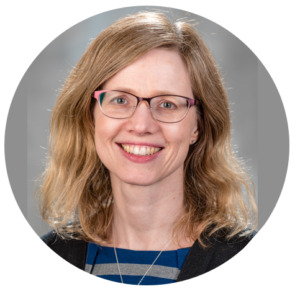
“Optimal Control of Self Assembly” Martha Grover Georgia Institute of Technology Abstract The organization of a large collection of particles into an ordered crystalline array is needed for many applications, including pharmaceutical separations, nuclear waste disposal, and optoelectronic metamaterials. Due to improvements in sensing technology, it is now becoming possible to monitor the crystalline state in real time during the crystallization process, and this sensor technology opens up new possibilities for feedback control of the assembly process. Here we monitor the crystalline state and use this data to build an empirical model. An optimal feedback policy is then calculated using the empirical model along with dynamic programming. Alternatively, the empirical model can be calculated from simulation “data” coming from a detailed particle-level simulation. Experimental results demonstrating the method will be presented for molecular crystallization and colloidal crystallization. Biography Martha Grover is a Professor in the School of Chemical & Biomolecular Engineering at Georgia Tech. She earned her BS in Mechanical Engineering from the University of Illinois, Urbana-Champaign, and her MS and PhD in Mechanical Engineering from Caltech. She joined Georgia Tech as an Assistant Professor in 2003, and received an NSF CAREER award in 2004. In 2011 she received the Outstanding Young Researcher Award from the Computing and Systems Technology Division of AIChE. Her research program is dedicated to understanding, modeling, and engineering the self-assembly of atoms and small molecules to create larger scale structures and complex functionality. Her approach draws on process systems engineering, combining modeling and experiments in applications dominated by kinetics, including surface deposition, crystal growth, polymer reaction engineering, and colloidal assembly. She is a member of the NSF/NASA Center for Chemical Evolution, and Georgia Tech’s Decision and Control Laboratory. |
| Semi-Plenary | |
 |
Thursday morning
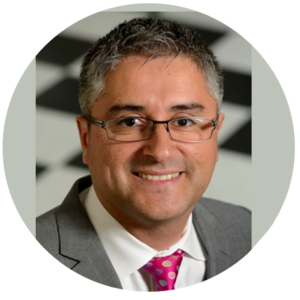
“Mathematics of Deep Learning” René Vidal Johns Hopkins University Abstract The past few years have seen a dramatic increase in the performance of recognition systems thanks to the introduction of deep networks for representation learning. However, the mathematical reasons for this success remain elusive. For example, a key issue is that the neural network training problem is non-convex, hence optimization algorithms may not return a global minima. In addition, the regularization properties of algorithms such as dropout remain poorly understood. The first part of this talk will overview recent work on the theory of deep learning that aims to understand how to design the network architecture, how to regularize the network weights, and how to guarantee global optimality. The second part of this talk will present sufficient conditions to guarantee that local minima are globally optimal and that a local descent strategy can reach a global minima from any initialization. Such conditions apply to problems in matrix factorization, tensor factorization, and deep learning. The third part of this talk will present an analysis of the optimization and regularization properties of dropout for matrix factorization. Examples from neuroscience and computer vision will also be presented. Biography Rene Vidal is the Herschel L. Seder Professor of Biomedical Engineering and the Inaugural Director of the Mathematical Institute for Data Science at The Johns Hopkins University. His research focuses on the development of theory and algorithms for the analysis of complex high-dimensional datasets such as images, videos, time-series, and biomedical data. Dr. Vidal has been Associate Editor of TPAMI and CVIU, Program Chair of ICCV and CVPR, co-author of the book “Generalized Principal Component Analysis” (2016), and co-author of more than 250 articles in machine learning, computer vision, biomedical image analysis, hybrid systems, robotics, and signal processing. He is a fellow of the IEEE, IAPR and Sloan Foundation, and has received numerous awards for his work, including the 2012 J.K. Aggarwal Prize, 2009 ONR Young Investigator Award, 2004 NSF CAREER Award, as well as best paper awards in machine learning, computer vision, controls, and medical robotics. |
| Public Lecture | |
 |
Thursday evening
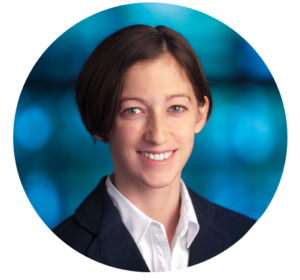
“Principles of Network Control for Understanding Cognition in the Human Brain and for Informing Therapeutic Interventions to Support Mental Health” Danielle S. Bassett University of Pennsylvania Abstract The human brain is a complex organ characterized by rich interconnection architecture. That architecture can be measured non-invasively using diffusion magnetic resonance imaging, and parsimoniously encoded as a network. Here, we offer evidence that principles of network control provide (i) compelling explanations for the human’s ability to control their own brain dynamics (and by extension behavior), and (ii) useful guidelines for brain stimulation in patients with cognitive dysfunction or otherwise altered brain dynamics. After discussing the current state of the field, we will highlight emerging questions and important directions for future work. Biography Danielle S. Bassett is the Eduardo D. Glandt Faculty Fellow and Associate Professor in the Department of Bioengineering at the University of Pennsylvania. She is most well known for her work blending neural and systems engineering to identify fundamental mechanisms of cognition and disease in human brain networks. She received a B.S. in physics from Penn State University and a Ph.D. in physics from the University of Cambridge, UK as a Churchill Scholar, and as an NIH Health Sciences Scholar. Following a postdoctoral position at UC Santa Barbara, she was a Junior Research Fellow at the Sage Center for the Study of the Mind. She has received multiple prestigious awards, including American Psychological Association’s ‘Rising Star’ (2012), Alfred P Sloan Research Fellow (2014), MacArthur Fellow Genius Grant (2014), Early Academic Achievement Award from the IEEE Engineering in Medicine and Biology Society (2015), Harvard Higher Education Leader (2015), Office of Naval Research Young Investigator (2015), National Science Foundation CAREER (2016), Popular Science Brilliant 10 (2016), Lagrange Prize in Complex Systems Science (2017), Erdos-Renyi Prize in Network Science (2018). She is the author of more than 225 peer-reviewed publications, which have garnered over 16700 citations, as well as numerous book chapters and teaching materials. She is the founding director of the Penn Network Visualization Program, a combined undergraduate art internship and K-12 outreach program bridging network science and the visual arts. Her work has been supported by the National Science Foundation, the National Institutes of Health, the Army Research Office, the Army Research Laboratory, the Office of Naval Research, the Department of Defense, the Alfred P Sloan Foundation, the John D and Catherine T MacArthur Foundation, the Paul Allen Foundation, the ISI Foundation, and the University of Pennsylvania. |
| Semi-Plenary | |
 |
Friday morning
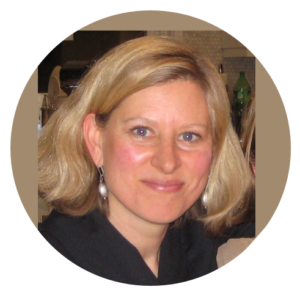
“From Stabilization and Tracking to Complex Control Specifications: A Perspective” Mireille E. Broucke University of Toronto Abstract A mandate of the area of hybrid systems is to provide design tools for control specifications that go beyond stabilization and tracking to complex specifications such as those expressed in linear temporal logic. Ideas from discrete event system theory and computer science are now ingrained in the discourse of our field. Yet a comprehensive hybrid design framework (analogous to the framework for linear MIMO control systems) encompassing both discrete and continuous feedback syntheses has been challenging. One reason for the extenuated development is that on the continuous time side lies a theoretical obstacle: to structurally characterize the intrinsic limits of a continuous time control system to achieve a non-equilibrium specification. In this talk, I give a perspective on how the theory of control has evolved from dealing almost exclusively with stabilization and tracking to addressing non-equilibrium specifications. We focus our study on affine control systems (a slight generalization of linear systems) defined on a polytopic state space. And we focus on control syntheses, well suited to polytopic state spaces, of affine and piecewise affine feedbacks. By studying a special model with special classes of feedbacks, some synthesis results have been achievable. The core problem can be distilled as the Reach Control Problem (RCP). The RCP is to synthesize a feedback such that the trajectories of an affine control system defined on a simplex in the polytopic state space reach a pre-specified facet of the simplex in finite time without first exiting the simplex. This problem captures two requirements embedded in almost all logic specifications: state constraints and trajectories reaching a goal set of states in finite-time. In this talk, we work our way from basic principles to deeper insights on the RCP, illuminating how traditional concepts only provide inspirational guideposts. We discuss a geometric theory of reach control for affine systems; an obstruction to reach control by continuous state feedback; a Lyapunov theory for reach control; and reach controllability for affine control systems. At the end we discuss applications, highlighting why they are well served by our new design approach. Biography Mireille Broucke obtained the BSEE degree in Electrical Engineering from the University of Texas at Austin in 1984 and the MSEE and PhD degrees from the University of California, Berkeley in 1987 and 2000, respectively. She was a postdoc in Mechanical Engineering at University of California, Berkeley during 2000-2001. She has six years of industry experience in control design for the automotive and aerospace industries. During 1993-1996 she was a program manager and researcher at Partners for Advanced Transportation and Highways (PATH) at University of California, Berkeley. Since 2001 she has been at the University of Toronto where she is a professor of Electrical and Computer Engineering. Her current research interests are in reach control theory and control theory applied to neuroscience. |
| Semi-Plenary | |
 |
Friday morning
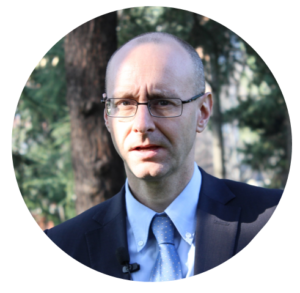
“Aerial Robotics: Challenges and Opportunities Outside the Lab” Lorenzo Marconi University of Bologna Abstract The use of drones in real life environments often unveils challenging control problems that are hardly imaginable within an indoor flight arena and inspires new research areas. The main goal of the talk is indeed to present research activities involving unmanned aerial vehicles motivated by their use in relevant application contexts outside the lab. Two main application areas are thoroughly presented in the talk. The first deals with aerial inspection of infrastructures requiring the physical contact between the drone and the inspected surface. Besides presenting industrial needs and economical impacts in the field, the talk will address specific research challenges pertaining to structural properties of the aerial robot and of the onboard control required to face dramatically different aerial scenarios. The second is about the use of drones for search and rescue applications in hostile environments, with a specific focus on quick localisation of victims buried by avalanches. The talk will report ongoing research activities carried out at European level jointly with professional search and rescue teams, showing the technological challenges raised in the field and the potentials of automatic control algorithms that are revolutionising actual search manual strategies. Besides addressing technical research problems, the talk will also touch on aspects about social innovation and financial sustainability of aerial technologies in certain fields, by identifying “orphan markets” in which control technologies can play a decisive role. Biography Lorenzo Marconi graduated in 1995 in Electrical Engineering from the University of Bologna. Since 1995 he has been with the Department of Electronics, Computer Science and Systems at University of Bologna, where he obtained his Ph.D. degree in March 1998. From 1999 he has been an Assistant Professor in the same Department where is now Full Professor since January 2016. He has held visiting positions at and collaborations with various academic/research international institutions. He is co-author of more than 250 technical publications on the subject of linear and nonlinear feedback design published on international journals, books and conference proceedings. He is also co-author of three international monographs. In 2005, he has been awarded jointly by Elsevier and the International Federation of Automatic Control (IFAC) for the best paper published in the period 2002-2005 on “Automatica”. He is also the recipient of the 2014 IEEE Control Systems Magazine Outstanding Paper Award for the best paper published on the magazine in the period 2012-2013, He is the recipient of the 2018 O. Hugo Schuck Best Paper Award assigned by the American Automatic Control Council for the best paper presented at the 2017 American Control Conference. He is Fellow of IEEE for “contributions to feedback design of nonlinear systems and unmanned aerial vehicles”. He is the Principal Investigator of the EU projects AiRobots (2010-2013), SHERPA (2013-2017), AirBorne (2018-). He is now serving as Senior Editor of IEEE Transaction on Automatic Control (Associate Editor from 2009 to 2013) and Associate Editor of IEEE Control Systems Technology (2012-) and Automatica (2014-). |
Special Sessions
Special sessions are focused events to spotlight emerging research areas, funding opportunities, and other topics of broad interest to the conference attendees. Examples include industry-led, research sponsor-led, education-themed, and history sessions. Special sessions usually do not include presentations of papers that are peer-reviewed and included in the conference proceedings.
For more information, or to discuss possible special session topics, please contact the Vice Chair for Special Sessions: Rafael Fierro ([email protected]).
S2: Reinforcement Learning: Leveraging Deep Learning for Controls
S3: Multivariable Control System Development On GM Hybrid Powertrains
S4: Research with Broad Scope and High Impact in an Industrial Laboratory
S5: An Overview of NSF Programs
S6: Getting Funded by NSF: Proposal Preparation and the Merit Review Process
S7: Autonomous and Connected Vehicles
S8: A First Course in Feedback, Dynamics, and Control: A Survey for the Global Control Community
S9: Advanced Control Problems in the Energy Services Industry and Opportunities at Halliburton
Special Sessions’ Information
S1: Autonomous and Intelligent Systems Research Overview and Career Opportunities at United Technologies Research Center
Sponsored by
Time: 12:00 – 13:00 Wednesday, July 10 2019
Location: Franklin Hall 8
We will give an overview of United Technologies Research Center (UTRC) as well as its parent company, United Technologies Corporation (UTC), whose businesses include Pratt and Whitney and Collins Aerospace. We will discuss career and partnership opportunities and then present a broad overview of research from UTRC’s Autonomous and Intelligent Systems Department. Particular focus will be on advanced controls and machine learning for a variety of applications including aerospace, human collaborative robotics, and manufacturing. The research discussed is being conducted by a diverse team of researchers with backgrounds in dynamical systems, system identification and estimation, advanced controls, applied mathematics, computer vision, computer science, and human factors in partnership with academic partners. The session is designed to give students and opportunity to understand the types of projects and career paths available at UTRC, and to give potential collaborators and opportunity to understand how to work with us.
Speakers
Dr. Andrew Sparks (Associate Director, Control Systems Group) [bio]
Dr. Amit Surana (Fellow, Autonomous and Intelligent Systems Department)
Dr. Abhijit Chakraborty (Staff Research Engineer, Control Systems Group)
Dr. Jeff Peters (Senior Research Engineer, Decision Support & Machine Intelligence Group)
S2: Reinforcement Learning: Leveraging Deep Learning for Controls
Sponsored by
Time: 18:00 – 19:00 Wednesday, July 10 2019
Location: Franklin Hall 8
Reinforcement learning is getting a lot of attention lately. People are excited about its potential to solve complex problems in areas such as robotics and automated driving, where traditional control methods can be challenging to use. In addition to deep neural nets to represent the policy, and algorithms to train them, reinforcement learning requires repeated exploration of the environment. As such exploration is time-consuming and potentially dangerous when done with the hardware, a simulation model is often used to represent the environment, at least for the initial training. In this talk, we will discuss reinforcement learning and contrast it with traditional control methods. We will go through the steps needed to set up and solve a reinforcement learning problem. We will then talk about relevant MathWorks capabilities and resources and will show an example of developing a robot controller using reinforcement learning.
Topics include:
- Creating MATLAB and Simulink environment models and provide observation and reward signals for training policies
- Training of policies using various reinforcement learning algorithms
- Parameterizing policy and value functions using deep neural networks, linear basis functions, and look-up tables
- Parallelizing environment simulations and gradient calculations on GPUs and multicore CPUs for policy training
- Deploying trained policies to embedded devices through automatic code generation for CPUs and GPUs
- Implementing controllers using reinforcement learning for automated driving and robotics applications
Speaker
Dr. Craig Buhr (MathWorks) [bio]
S3: Multivariable Control System Development On GM Hybrid Powertrains
Sponsored by
Time: 12:00 – 13:00 Wednesday, July 10 2019
Location: Franklin Hall 10
General Motors Co. (NYSE: GM) has a leadership position in the world’s largest and fastest-growing automotive markets. GM, its subsidiaries and joint venture entities sell vehicles under the Chevrolet, Cadillac, Baojun, Buick, GMC, Holden, Jiefang, and Wuling brands. More information on the company and its subsidiaries, including OnStar, a global leader in vehicle safety, security and information services.
Controls technology is a primary enabler of future mobility. There is a tremendous demand for talented engineers to take our control system developments to another level. We will share with you the type of controls techniques that are commonly used or emerging in the industry as well as the desired expertise. The example of multivariable control system development for hybrid powertrain will be provided.
When electric motors are added to the components of a conventional driveline new dynamic challenges are introduced as well as new control opportunities. The additional direct coupled rotating inertial elements create new underdamped resonant modes in the driveline system while the fast torque response of the electric motors offers high bandwidth control with multiple actuators. This presentation describes the industry first production application of multivariable control design for managing the driveline dynamics in hybrid powertrains. The high-level customer requirements are used to specify the control design level requirements for damping ratio, settling time, etc.. Physics-based modeling and insight to the inter-processor communication process is used to develop simulation models for performance validation and reduced order sampled-data models for the control design. Model fidelity is verified and calibrated with frequency sweep data logged from vehicle tests. A full state estimator is implemented to gain access to unmeasured signals which switches parameters for all range state and lash state operating configurations of the system. LQR gain selection is used to design control and estimator gains for all operating configurations. Closed loop vehicle frequency sweeps are used to validate that damping levels and drive quality requirements are achieved. Robustness is verified using closed-loop analysis and simulation with parameter variations.
Scholars and students who are interested in collaborating with GM or joining in GM will find this special session beneficial. You are also welcome to visit the GM booth to discuss collaborative development, careers and internship opportunities with GM.
Organizers
Wendy Eckman (General Motors) [bio]
Robert Morris (General Motors) [bio]
Jia Schock (General Motors) [bio]
Speaker
Robert Morris (General Motors) [bio]
S4: Research with Broad Scope and High Impact in an Industrial Laboratory
Sponsored by
Time: 12:00 – 13:00 Wednesday, July 10 2019
Location: Franklin Hall 2
In this talk, we will present an overview of research activities at MERL, including fundamental controls research and the application of state-of-the-art control techniques to a variety of products. We will focus on fundamental research topics including model predictive control and the control of constrained systems, estimation and motion planning for autonomous systems, and learning for control. In addition, we will describe how these fundamental research areas have impacted applications such as autonomous vehicles, energy-efficient HVAC systems, high-precision manufacturing, and spacecraft guidance and control.
We encourage students and researchers interested in collaborating with MERL to attend this talk. Lunch will be served.
Organizers
Karl Berntorp (MERL) [bio]
Claus Danielson (MERL) [bio]
Stefano Di Cairano (MERL) [bio]
Rien Quirynen (MERL) [bio]
Ankush Chakrabarty (MERL) [bio]
S5: An Overview of NSF Programs
Sponsored by
Time: 12:00 – 13:00 Wednesday, July 10 2019
Location: Franklin Hall 1
The National Science Foundation (NSF) offers a number of funding opportunities for investigators working in the field of controls, both within the disciplinary programs in Engineering and other directorates, and through cross-cutting initiatives that are foundation-wide. This presentation will describe opportunities that are relevant to the robotics, dynamics and controls communities. The presentation will also describe programs targeted toward junior investigators, as well as guidelines for proposal preparation and NSF’s Intellectual Merit and Broader Impacts criteria. Question-and-answer session will follow the presentation.
Organizers
Irina Dolinskaya (NSF) [bio]
Robert Landers (NSF) [bio]
Speaker
Radhakisan (Kishan) Baheti (NSF) [bio]
Jordan Berg (NSF) [bio]
Cynthia Chen (NSF) [bio]
Irina Dolinskaya (NSF) [bio]
Robert Landers (NSF) [bio]
Eduardo Misawa (NSF) [bio]
S6: Getting Funded by NSF: Proposal Preparation and the Merit Review Process
Sponsored by
Time: 18:00 – 19:00 Wednesday, July 10 2019
Location: Franklin Hall 1
So, you think you have a great research idea, now how do you get funding from the National Science Foundation (NSF) to do the work? A well-scoped and written proposal is instrumental to successful submission. This session targets junior faculty and researchers who might be new to NSF and describes detailed guidelines and practical advice for proposal preparation. The presenter will go over NSF review process and Intellectual Merit and Broader Impacts criteria, as well as share most common mistakes made by the Primary Investigators when submitting a proposal. Question-and-answer session will follow the presentation.
Organizers
Irina Dolinskaya (NSF) [bio]
Robert Landers (NSF) [bio]
Speaker
Irina Dolinskaya (NSF) [bio]
S7: Autonomous and Connected Vehicles
Time: 12:00 – 13:00 Friday, July 12 2019
Location: Franklin Hall 8
The area of connected and autonomous vehicles has been progressing in academia and industry for the past two decades. However, in the last half decade, a burst of activity has caused rapid growth in the industry: new centers from established companies, countless startups developing entire platforms or single feature technologies, and frequent creative, unpredictable acquisitions and partnerships. The fact that many companies have projected deployment of this technology as soon as 2021 indicates that a drastic shift in a traditionally conservative industry is underway. The promise of reduced traffic congestion, mobility to elderly and differently-abled populations, and improved urban infrastructure has the industry investing significant resources to transform their efforts from research and development into production as soon as possible. To realize this goal means integrating a wide range of areas, including motion planning, integrated vehicle controls, including both vehicle dynamics and powertrain (VD&PT) control, eco-routing, transportation analytics, rideshare optimization, and multi-platform applications. Every company both overlaps with other companies in their efforts and has simultaneously developed their own unique approach. This workshop aims to highlight the work and approach of four automotive companies. Understanding the current state of CAVs in industry and relevant control challenges will be extremely helpful in framing and guiding future research.
Organizers
Selina Pan (Toyota Research Institute) [bio]
Mahdi Shahbakhti (Michigan Technological University) [bio]
Speakers
Mike Huang (Toyota Motor North America) [bio]
Jeff Zhao (General Motors R&D) [bio]
Hoseinali Borhan (Cummins Research and Technology) [bio]
Hongtei Eric Tseng (Ford Motor Company’s Research and Advanced Engineering) [bio]
S8: A First Course in Feedback, Dynamics, and Control: A Survey for the Global Control Community
Time: 12:00 – 13:00 Friday, July 12 2019
Location: Franklin Hall 1
Undergraduate students in many engineering programs around the world take only one control course. The focus of this Special Session is on the most important topics that need to be included in this one and only control course. This issue is relevant to both academia and industry. The IFAC Educational Committee in cooperation with the IFAC Industrial Committee has been working on a comprehensive survey for the global Control community. The survey will be ready for distribution by the time of the Special Session. The main purpose of the Special Session is to introduce the survey, share preliminary results, and encourage attendees to not only respond to the survey, but also disseminate across their organizations and related professional societies.
The target audience is academics, who tech introductory control courses, control textbook authors, industrialists, who hire or interact with new graduates, and industrialist, who teach internal control courses. Speakers will have short opening remarks but the intent is to have an interactive discussion with the audience.
Organizers
Anthony J. A. Rossiter (University of Sheffield) [bio]
Atanas Serbezov (Rose-Hulman Institute of Technology) [bio]
Katarina Zakova (Slovak University of Technology in Bratislava) [bio]
Mikulas Huba (Slovak University of Technology in Bratislava) [bio]
Antonio Visioli (University of Brescia) [bio]
Speakers
Margret Bauer (University of Pretoria) [bio]
Nicanor Quijano (Universidad de los Andes) [bio]
Dennis Williams (Lyondell Chemical) [bio]
Dr. Craig Buhr (MathWorks) [bio]
S9: Advanced Control Problems in the Energy Services Industry and Opportunities at Halliburton
Sponsored by

Time: 12:00 – 13:00 Friday, July 12 2019
Location: Franklin Hall 2
Please join a special session to learn about control challenges in the energy service sector and how Halliburton’s Controls Center of Excellence approaches them. Halliburton is one of the world’s largest providers of products and services to the energy industry. The company is leveraging control theory, data analytics, and digital technologies to bring automation to the upstream oil and gas industry. This session intends to provide insight into technologies that are advancing the energy service industry. We will introduce some practical and challenging control problems, such as wellbore trajectory control, active vibration suppression, and process optimization to maximize hydrocarbon recovery. Students and researchers interested in collaborating with Halliburton are encouraged to attend this session.
Speakers:
Robert Darbe (Halliburton) [bio]
Umut Zalluhoglu (Halliburton) [bio]
Manfred Morari (University of Pennsylvania) [bio]
Workshops
The ACC will offer workshops addressing current and future topics in automatic control from experts in academia, national laboratories, and industry. The workshops at ACC 2019 will take place prior to the conference on July 8-9th for the two-day workshop and July 9th for the all one-day workshops at the conference venue.
W1: A Sociotechnical Systems Approach for Energy-Efficient Mobility in Smart Cities – Room 401
W2: Control for Networked Transportation Systems (1.5 days) – Franklin Hall 6
W3: Robot-Assisted Manufacturing: Challenges and Opportunities – Room 403
W4: Practical Methods for Real World Control Systems – Room 404
W5: Interplay between Control, Optimization, and Machine Learning – Room 409
W7: Advanced data-driven methods for complex systems analysis and controls – Room 407
W8: Aerospace Controls: Current Topics in Theory and Practice – Room 411
W9: Analysis and Control of Complex Networks: State of the Art and Research Directions – Room 412
W10: Nonlinear Optimization: Techniques for Engineering – Room 413
W11: Model Predictive Control Workshop (2 days) – Room 414
For more information about the workshops, please contact the Workshop Chair: Wei Zhang ([email protected]).
One-day (July 9th, 2019)
W1: A Sociotechnical Systems Approach for Energy-Efficient Mobility in Smart Cities
Location: Room 401
Organizers: Andreas Malikopoulos, and Liuhui Zhao (University of Delaware)
A mobility system involves the interactions of three heterogeneous features: 1) transportation systems and modes, e.g., connected and automated vehicles, electric vehicles, public transit, and shared mobility, 2) social behavior of drivers and travelers interacting with these systems, and 3) institutional behavior of organized units such as regulators that govern the transportation systems through policies. Current methods design and analyze mobility, which can be referred to as a sociotechnical system, with each of these features in isolation resulting in lack of the understanding of their interdependence, and thus, unbalancing of travel demand and given the capacity of the transportation network. The latter has significant implications on traffic congestion, energy consumption, travel delays, safety and eventually, the frustration that directly impacts the quality of life. Although several research efforts have aimed at enhancing our understanding of improving next-generation mobility systems, it appears that these systems are considered in isolation without deliberating on human perception and policies. This can lead to solutions that demonstrate a selfish rather than system-centric or “socially” optimal behavior. The workshop intends to stimulate a discussion on how we can develop an energy-efficient mobility system from a sociotechnical systems perspective.
Speakers: Alexandre Bayen (University of California, Berkeley), Phil Barnes (University of Delaware), Christos Cassandras (Boston University), David Corman (National Science Foundation), Hosam Fathy (Penn State University), Karl Johansson (KTH Royal Institute of Technology), Rahul Mangharam (University of Pennsylvania), Marco Pavone (Stanford University), and Jonathan Sprinkle (University of Arizona).
The preliminary website can be found here.
W3: Robot-Assisted Manufacturing: Challenges and Opportunities
Location: Room 403
Organizers: John T. Wen (Rensselaer Polytechnic Institute), and Abhijit Chakraborty (United Technology Research Center)
This workshop will focus on sensing and control challenges and opportunities in the fast-changing landscape of robots in manufacturing. A panel of researcher from industry and academia will present a set of case studies on the effective integration of robots into a manufacturing environment to assist human workers to increase performance and productivity. The examples will draw from application domains such as aerospace, renewable energy, and automotive industries. The underlying control problems will include vision and force guided motion, collaborative human-robot assembly, robotic manipulation of deformable materials, robot grasping and dexterous manipulation, learning control, and others. Additional discussion will include distributed control and communication middleware architecture and the advantages and challenges of open source software community. The workshop will highlight the recently established Advanced Robotics for Manufacturing (ARM) Institute. As part of the Manufacturing USA Network, ARM is funded by the Department of Defense to address these challenges by bringing research results on the factory floor. The workshop would be of interest to researchers with general control background who are interested in learning about industrial applications and use-cases related to robot-assisted manufacturing and smart factory, and practitioners who would like to learn about the latest research tools and results related to collaborative human-robot control systems.
W4: Practical Methods for Real World Control Systems
Location: Room 404
Organizers: Daniel Abramovitch (Agilent Labs), Michael Borrello (Philips Healthcare), Sean Andersson (Boston University), and Craig Buhr (Mathworks)
A question one should ask of any advanced algorithm is, “How do we make that work in a real system?” A question one should ask of any industrial control system is, “How do we apply better algorithms to this problem?” The two questions are dual sides of the same “bridging the gap” problem that has hounded control for decades. This workshop will examine practical methods that address this problem from both sides: ways to implement advanced algorithms on real systems and ways to improve industrial control using advanced methods. We will examine which system identification methods work on which physical systems, as model-based control requires a model. We will discuss why so many industrial controllers are PIDs, present a universal framework for different PID implementations, describe how to tune the PID to the identified system model, and show how to augment these with higher order controller dynamics (a.k.a. filters). We will discuss how to make state-space models more useable in real-time systems. Speaking of which, we will explain how to program filters and PIDs in real-time control systems. We will discuss things to know about hardware implementation and tradeoffs with ADCs, DACs, and analog filters. We will talk about the current set of real-time processing chips and the programming models that go along with them. Throughout we will offer hardware/software demonstrations of how tools like Matlab and Simulink can be used in these contexts. We won’t bridge the gap in a day, but we can move the needle.
A web page that holds the information from the brochure can be found here.
A PDF version of the workshop flyer can be found here.
W5: Interplay between Control, Optimization, and Machine Learning
Location: Room 409
Organizers: Bin Hu (UIUC) and Laurent Lessard (University of Wisconsin–Madison)
In the past 5 years, many interesting research ideas have emerged from the fields of controls, optimization, and machine learning, and have lead to cross-fertilization of tools and results. On one hand, tools from controls, systems, and physics have been tailored for optimization and machine learning applications; the dynamical system perspectives of algorithms in optimization and machine learning have led to exciting new results. On the other hand, machine learning and optimization methods have been used to push the boundary of traditional control. For example, reinforcement learning has shown great potential for complex control tasks. This workshop aims to reflect such an increasingly interdisciplinary research trend, and inspire more collaborations between the control, optimization, and machine learning communities.
Speakers: Jason Lee (USC), Rene Vidal (JHU), Quanquan Gu (UCLA), Jelena Diakonikolas (UW-Madison), Na Li (Harvard), Sarah Dean (UC Berkeley), Bin Hu (UIUC), and Laurent Lessard (UW-Madison).
The preliminary website can be found here.
W6: Challenges and Solutions for Legged Robotics: Control, Dynamics, and Optimization for Theory and Application
Location: Room 406
Organizers: Ayonga Hereid (Ohio State University), Christian Hubicki (Florida State University), and Ye Zhao (Harvard University)
Legged robots have long held the promise of navigating terrain not accessible by wheeled and tracked robots, yet demonstrating dynamically stable and agile locomotion remains a challenging task for these complex machines. Legged locomotion, which exhibits highly nonlinear dynamics coupled with discrete switching behavior, is a quintessential example of a complex dynamical system. Realizing such dynamic maneuvers requires one to face complexities inherent in legged robots in the form of highly nonlinear, underactuated dynamics and the unilateral nature of the contact. From a broader perspective, many theoretical and technical challenges in the study of legged locomotion present a unique opportunity for multiple disciplines to coalesce and make fundamental scientific contributions realizable on dynamic robotic platforms. This workshop will bring together the most recent findings from a broad range of fields in control, dynamics, and optimization for legged robotics. In doing so, participants will have the opportunity to discuss the existing challenges in legged robotics, broadening awareness of complementary approaches as well as next-generation control solutions that draw and build on strengths in each area.
Speakers: Aaron Ames (California Institute of Technology), Xingye Da (Nvidia), Jessy Grizzle (University of Michigan), Avik De (Ghost Robotics), Aaron Johnson (Carnegie Mellon University), Patrick Wensing (University of Norte Dame), Michael Posa (University of Pennsylvania), Bobby Greg (University of Texas, Dallas), and Yan Gu (University of Massachusetts, Lowell).
W7: Advanced data-driven methods for complex systems analysis and controls
Location: Room 407
Organizers: Jr-Shin Li, and Shen Zeng (Washington University, St. Louis)
A wide range of highly relevant problems found in nature, engineering, as well as societal structures are often plagued with overwhelmingly complex dynamical components and structures that are beyond the reach of current systems analysis and control design principles. A common thread of these very challenging problems is the pervasive theme of having large numbers of highly interacting dynamic parts. As a result, interest in cutting-edge analysis, estimation and control algorithms, and technologies suitable for these emerging sophisticated dynamical systems have seen stellar growth in recent years. A very promising approach that is rapidly gaining in interest and importance over the recent years is based on the idea of leveraging recent advances in data science and digital technology. Indeed, in many scientific domains data are becoming increasingly abundant, and easy to access or generate, while analytical models often remain elusive.
This workshop offers a survey of emerging techniques and research problems in this highly exciting field centered around data-driven computational methodologies to tackle control theory’s biggest open challenges related to highly nonlinear or very large-scale phenomena. Emphasis will be placed on both recent theoretical developments and emerging applications at the interface between systems science, data science, machine learning, physics, neuroscience, and biology. We will introduce state-of-the-art methods for both theoretical and data-driven investigations of fundamental properties of complex dynamical systems from measured or simulated data, including the problems of extracting governing equations or different relevant spatiotemporal structures, uncovering topological and geometric properties of the state space, as well as the introduction of novel controller and observer design paradigms. Moreover, several open problems and opportunities for further fruitful collaborative efforts in this emerging field at the intersection of systems and control theory, data science, statistics, and machine learning will be articulated and discussed.
The preliminary website can be found here.
W8: Aerospace Controls: Current Topics in Theory and Practice
Location: Room 411
Organizers: Richard A. Hull (Collins Aerospace), Kevin Wise (The Boeing Company), Naira Hovakimyan (University of Illinois), D. Brett Ridgely (Raytheon Missile Systems), Zhihua Qu (University of Central Florida), Ilya Kolmanovsky (The University of Michigan), Soon-Jo Chung (Caltech, Jet Propulsion Laboratory), Andrea L’Afflitto (University of Oklahoma), and Venanzio Cichella (University of Iowa).
This one day workshop organized by members of the IEEE CSS Technical Committee on Aerospace Controls, will focus on current control system topics that are having an impact in the aerospace industry. The workshop will be presented by leading control systems experts from industry and academia that are involved in some of the most exciting research and development efforts in the field of Aerospace. This workshop is intended for students and professors in search of current applications in need of solutions as well as industry and government professionals interested in potential solutions from academia and adjacent branches of the aerospace industry. This workshop is sponsored and presented by members of the IEEE CSS Technical Committee on Aerospace Controls and their collaborators. The purpose of the technical committee is to help build an international scientific community and promote awareness of outstanding technical achievements in the field of Aerospace Controls.
For a detailed agenda and biographical information of the presenters please visit the events page of our Technical Committee website here.
W9: Analysis and Control of Complex Networks: State of the Art and Research Directions
Location: Room 412
Organizer: Fabio Pasqualetti (University of California, Riverside)
Networks have become a paradigmatic way of representing complex systems across diverse scientific disciplines and application domains, where the interactions pattern among different parts is itself complex and evolves along with the systems dynamics. Electrical power grids, mass transportation systems, and (semi)autonomous multi-agent systems are instances of modern technological networks, while metabolic and brain networks are biological examples. Our ability to operate and reconfigure complex networks depends critically on our understanding of the coupling between the network structure and the systems functionalities. When successfully developed, such understanding will necessarily have a tremendous impact, allowing us to reveal fundamental mechanisms in natural systems, control the dissemination of information in social and cyber networks, and design robust and high-assurance (semi)autonomous systems. Yet, achieving this understanding is rather challenging and, despite important advances in related areas, including control theory, statistics, and optimization, fundamental relations, tradeoffs, and limitations between the network topology and its functions are still largely unknown. This workshop will bring together experts in the areas of analysis and control of complex networks, and it will serve as a venue to present the latest results and engage in far-reaching discussions about ongoing and future efforts in modeling, analyzing, and controlling complex network systems.
Speakers: Erfan Nozari (University of California at San Diego), Alex Olshevsky (Boston University), Shreyas Sundaram (Purdue University), Mohamed Ali Belabbas (University of Illinois at Urbana-Champaign), Victor M. Preciado (University of Pennsylvania), Sandip Roy (Washington State University), Sergio Pequito (Rensselaer Polytechnic Institute), Fabio Pasqualetti (University of California at Riverside).
For a detailed agenda please visit the website here.
W10: Nonlinear Optimization: Techniques for Engineering
Location: Room 413
Organizer: R. Russell Rhinehart (Oklahoma State University)
This full-day workshop will be a practical guide for those using multivariable, constraint handling, nonlinear optimization. Although fundamental methods will be revealed, the takeaway will be participants’ ability to:
- Define the objective function (cost function).
- Incorporate constraints (either hard or as appropriately weighted penalties).
- Choose an appropriate optimizer for application attributes.
- Choose appropriate convergence criteria and threshold values.
- Choose initialization and the number of trials to be confident in finding the global optimum.
One-day and half (July 9th, 2019)
W2: Control for Networked Transportation Systems
Location: Franklin Hall 6
Organizers: Mahnoosh Alizadeh (University of California, Santa Barbara), Sam Coogan (Georgia Institute of Technology), Vijay Gupta (Notre Dame University), Ketan Savla (University of Southern California), and Dan Work (Vanderbilt University)
The rapid technological innovation occurring at nearly all modes of mobility is uniquely defining the present time as a period of dynamism in transportation systems. Shared mobility services, electric vehicles, near-real-time e-commerce delivery, and automated vehicles are just a few of the new types of emerging networked transportation systems application domains. These advances offer the promise to make transportation systems more sustainable, more resilient to disruption, more equitable, and more efficient, but this will only occur with the right fundamental insights to aid their design, deployment, and management. One challenge inhibiting the potential promise of the next generation of networked transportation systems is caused by the disparate communities in which core theories and engineering techniques to manage their operations reside. The networked controls community has been responsible for developing decision science tools for wide classes of problems and application domains. The transportation science community has been developing models and methods to understand how people, infrastructure, and mobility devices interact. The purpose of this NSF-sponsored workshop is the creation of a forum where the networked controls community and the transportation science community can begin to exchange ideas and perspectives on recent advances in the field as well as the core challenges inhibiting research progress on current and future networked transportation systems. This 1.5 day workshop will facilitate discussion among leading researchers and practitioners from academia, industry, and government through invited talks, and panel discussions.
Two-days (July 8-9th, 2019)
W11: Model Predictive Control Workshop
Location: Room 414
Organizers: James B. Rawlings (University of California, Santa Barbara) and Thomas A. Badgwell (ExxonMobil)
Model predictive control (MPC) has become the most popular advanced control method in use today. Its main attractive features are (i) optimization of a model forecast over the available actuators (ii) estimation of the state of the system and disturbances from the process measurements, (iii) accounting for the process and actuator constraints, and (iv) accounting for full multivariable interactions. After its introduction in the process industries in the 1970s, MPC has today become a pervasive control technology in many industries, and is now being increasingly deployed for optimization of high-level functions such as minimizing energy consumption and maximizing product quality.
The webpage of the workshop can be found here.
Social Events
Opening Reception
Tuesday, July 9, 6:00 PM–9:00 PM, Liberty Ballroom, Headhouse Tower
Young Professionals Reception
Wednesday, July 10, 5:00-8:00 PM, 13 Restaurant
The IEEE CSS YP group invites all YP at ACC to join us for a casual reception where light appetizers will be served, and a cash bar will be available.
The IEEE CSS Young Professionals organization is responsible for, but not limited to, promoting the involvement of CSS members that are in the early stages of their professional career in Society activities, for organizing events and programs to aid CSS members in early career development, for disseminating information on CSS activities to young professionals within the society. This is an inclusive organization that is open to any YP, regardless of job sector (industry or academia) or student status (student or post-graduate).
This is a great opportunity to learn about IEEE CSS YP and network with others that are in the beginning stages of their professional career.
Awards Ceremony
Thursday, July 11, 11:30 AM–12:15 PM, Liberty Ballroom A-B, Headhouse Tower
All conference attendees are encouraged to attend the announcements of the annual AACC and ACC awards. Come celebrate accomplishments in our field!
Coffee Breaks
Coffee breaks will be held in the Franklin Hall pre-function area on the fourth floor as follows:
Wednesday: 9:30AM – 10:00AM and 3:30 PM – 4:00 PM
Thursday: 9:00AM – 9:30AM and 3:30 PM – 4:00 PM
Friday: 9:30AM – 10:00AM and 3:30 PM – 4:00 PM
Conference Banquet Luncheon
Thursday, July 11, 12:15 PM–1:30 PM, Grand Ballroom A-F
A banquet ticket is included with the registration packets for Member and Non-Member registrants. Additional conference banquet tickets can also be purchased for $100 each. Children under 4 are free.
Closing Reception
Friday, July 12, 7:00 PM–9:00 PM, Reading Terminal Market, 51 N. 12th St.
The ACC closing reception will be held at the Reading Terminal Market, right outside the Philadelphia Marriott Downtown. Come relax and celebrate the close of the ACC with friends and colleagues!